On behalf of the University of Washington’s six Health Science Schools and the Magnuson Scholar Program, here are updates from our scholars since their announcement in May 2025.
Beginning in June of 2025, the seven scholars received the first half of their $34,000 Scholarship. In October the scholars were recognized by their colleagues, mentors, deans and the Magnuson Family on South Campus. At the beginning of Winter Quarter all seven received their second and final scholarship payment. This Winter Update is an opportunity to convey how being recipients of this honor has helped them to pursue and achieve both their research and personal goals.
We appreciate your support of these hard-working and focused scholars. Health Sciences Services efforts to fully recognize their achievements, while acknowledging Warren G. Magnuson’s extraordinary public service career, is an absolute privilege.
2025-26 Magnuson Scholars
| Scholar | School |
|---|---|
| Celine Atkinson | School of Dentistry |
| Isaac Knouff | School of Medicine |
| Priscilla Carminol Rodriguez | School of Nursing |
| Hui-Hsuan Chan | School of Pharmacy |
| Yilda Macias | School of Public Health |
| Brittany Jones-Cobb | School of Social Work |
| Natalie Turner | School of Social Work |
Scholar Profiles
Celine Atkinson – School of Dentistry
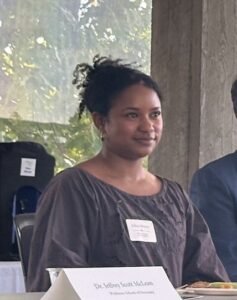
I am deeply grateful to the UW School of Dentistry and Dean André Ritter for selecting me as one of this year’s Magnuson Scholars. This recognition means a great deal to me and reflects the supportive academic community that has guided my training. The scholarship has allowed me to fully focus on my research and professional development without the burden of financial stress. I am thankful for the freedom it provides.
Since receiving the award, I have continued my PhD research in the McLean lab, where I study periodontitis—a disease affecting nearly half of U.S. adults. This research has broader implications for systemic health, particularly related to conditions like heart disease and diabetes. We are particularly interested in how these organisms physically interact to drive unique gene expression changes that may accelerate disease progression.
To investigate this, I am applying microSPLiT, a high‑resolution single‑cell RNA sequencing method. My goal is to refine this technique for these pathogens and use it to study their behavior in both mono‑ and co‑culture, enabling us to resolve microbial crosstalk at single‑cell resolution for the first time in this system.
A major milestone this year was completing our mono‑culture microSPLiT experiment in collaboration with Dr. Anna Kuchina’s group at the Institute for Systems Biology. With the resulting dataset, I have begun identifying highly expressed genes, metabolic pathways, and cell states – insights that will guide my upcoming co‑culture experiments and help clarify how these pathogens cooperate to drive disease.
Looking ahead, I plan to publish this work and use it as the foundation for an NIH F‑series fellowship application. My long‑term goal is to contribute to science‑driven, equitable improvements in oral health and microbial research.
I want to sincerely thank the Magnuson Committee, my mentor Dr. Jeff McLean, the Clinical Oral Microbiome Research Center, and the broader UW community for their support. This scholarship has empowered me to pursue ambitious ideas, and I’m excited for the work ahead.
Isaac Knouff – School of Medicine
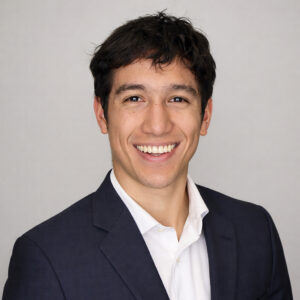
It is a great honor to be a recipient of the Magnuson Scholarship. I am grateful to the Magnuson family and friends who support the scholars each year. To all those who continue to be inspired by Senator Magnuson’s legacy, you are appreciated.
I am currently a second-year medical student and am about to begin my clinical rotations. Since receiving the scholarship, I have had the opportunity to disseminate and further develop our research examining the relationship between intraoperative insulin use and hyperglycemia in patients undergoing pelvic and abdominal surgery. Hyperglycemia is a known risk factor for postsurgical complications, especially in diabetic patients.
Working with Dr. David R. Flum and the Surgical Outcomes Research Center (SORCE), our team investigated the potential anti-inflammatory effects of insulin in a double-blind, randomized controlled pilot trial with more than 100 patient volunteers at the University of Washington Medical Center – Montlake. The data demonstrated a signal in the treatment group, which experienced lower rates of hyperglycemia and fewer postoperative complications. We also observed lower levels of inflammation in the insulin group.
This past summer, I presented our findings at the American College of Surgeons Washington-Oregon meeting, and I am now playing a key role in preparing our work for submission to an academic journal. The Magnuson Scholarship helped support travel to the conference and allowed me to devote meaningful time to research while continuing my clinical education.
We plan to use the feasibility and early signal from this pilot study as the foundation for a larger, multisite randomized controlled trial. We intend to pursue funding through an NIH grant application this year.
Our team is excited to further clarify the mechanisms by which insulin may function as an anti-inflammatory agent and, ultimately, to advance the care of patients at risk for perioperative hyperglycemia and related complications. We expect this work to further elucidate the role of insulin in inflammatory pathways and strengthen our understanding of diabetic pathology.
Priscilla Carmiol-Rodriguez – School of Nursing
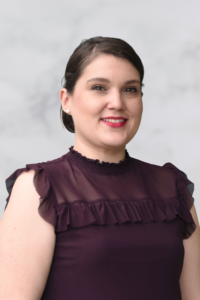
I am deeply honored and grateful to be named a 2025–2026 Magnuson Scholar. I extend my sincere thanks to the Magnuson Institute for their support and for carrying forward Senator Magnuson’s inspiring legacy in health advancement and scientific discovery.
This award has been instrumental in allowing me to advance my academic journey. I’ve been able to consolidate my dissertation committee, chaired by Dr. Jonika Hash—a fellow Magnuson Scholar. I’ve also had the opportunity to take coursework that strengthens the development of my dissertation proposal. The financial support has helped cover tuition expenses, enabling me to remain in the program and dedicate more fully to my research and academic responsibilities.
The Magnuson Scholarship has made a profound impact on my ability to pursue dissertation research focused on sleep health and quality of life among Hispanic family caregivers of children with neurodevelopmental disorders. My research for improving sleep health and exploring cardiometabolic health disparities may reduce the risk for diabetes and improve disease management in the context of diabetes diagnosis. These caregivers often encounter unique and compounding challenges—cultural, linguistic, and systemic—that intensify the emotional and physical demands of caregiving.
My research explores how disrupted sleep affects caregivers’ wellbeing, including cardiometabolic health, and how these impact caregiving outcomes. Recognizing the barriers caregivers face in accessing sleep-related care, my dissertation includes the cultural adaptation of evidence-based sleep interventions. I will develop culturally responsive prompts for a large language model–enabled chatbot, built on an existing caregiver support platform created by Dr. Weichao Yuwen and her interdisciplinary team. Dr. Yuwen is another fellow Magnuson Scholar and a member of my dissertation committee.
Thanks to the Senator Magnuson legacy and the Magnuson Institute, I am filled with gratitude and inspired to continue advancing meaningful research that supports and uplifts underserved communities.
Hui-Hsuan Chan – School of Pharmacy
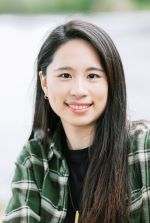
My sincere thanks to the Magnuson Legacy for their generosity and long-standing commitment to supporting scholars and advancing health science research. This scholarship is one of the biggest milestones in my life and a recognition that motivates me to continue dedicating myself to my work in health economics and health policy. I am honored and truly grateful for this opportunity and for the support provided by the Magnuson community as I continue my PhD training.
I am currently in the third year of my PhD in HEOR and working on my dissertation, focusing on evaluating the impact of GLP-1 receptor agonists on common comorbidities, such as diabetes, in the obesity population, with an emphasis on long-term health and economic outcomes. Through this work, I hope to generate evidence that can help inform better decision-making in the management of obesity and related chronic diseases.
Over the past several months, I have had the opportunity to work on multiple cost-effectiveness and budget impact analysis projects across different disease areas. These projects include studies on smoking cessation, narcolepsy, breast cancer cost-effectiveness modeling, and a budget impact analysis for chronic rhinosinusitis with nasal polyps (CRwNP). I also completed a cost-effectiveness analysis examining the integration of breast cancer screening into cervical cancer screening programs in Cameroon, which has been submitted as an abstract to ISPOR. I hope to present the result in May 2026.
This project showed that clinical breast examination is highly cost-effective, particularly in resource-limited low-and middle-income countries. Findings suggest that the integrated screening approach could avert approximately 50% of breast cancer deaths and 51% of disability-adjusted life years (DALYs). In a separate project, I co-authored a paper on the cost-effectiveness of primary care–based risk assessment and hereditary cancer genetic testing in the United States.
I would like to thank my family for their constant support and belief in me throughout this journey. As an international student, their encouragement from afar has played a central role in both my academic and personal growth, and this achievement would not have been possible without them. I am honored to share this milestone with my family and remain committed to contribute meaningfully to public health and health policy research.
Yilda Macias – School of Public Health
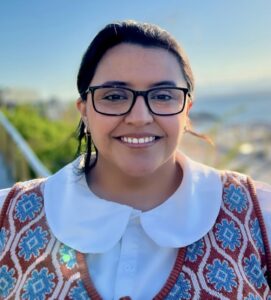
Being selected as a 2025–2026 Magnuson Scholar has been an incredible honor. This award has been life-changing, providing the financial stability and flexibility needed during a personally challenging year. With this support, I was able to cover my tuition, supplement my stipend, and take advantage of training opportunities outside of UW, allowing me to focus fully on my research during a major life transition.
Since receiving this award, I have continued working full time on my dissertation under the guidance of Dr. Holly Harris. My research leverages collaborations with cohorts in the US, Mexico, and UK, examining the association of polycystic ovary syndrome with type 2 diabetes and pancreatic cancer.
Working with international research groups has taught me not only how to access and manage large datasets, but also how to navigate the practical and logistical challenges of research across borders. These experiences are sharpening my skills and building the confidence I need to lead future research projects as an aspiring independent investigator. The scholarship has also given me the flexibility to continue taking elective courses that broaden and strengthen my training, while allowing me to dedicate myself fully to research.
The Magnuson Scholarship has also enabled me to cover publication and conference fees, and to attend a summer crash course on g-methods taught by field experts at Harvard University. This course provides in-depth, hands-on training, giving me skills applicable to my dissertation. In addition, I have begun drafting a postdoctoral research plan and identifying labs and principal investigators to connect with as I prepare to defend and graduate in summer 2027.
Thanks to the Magnuson Scholarship, I have been able to maintain momentum, continue developing professionally, and advance my doctoral training with sustained focus. The support has provided time, resources, and space necessary to engage deeply with my work, for which I am profoundly grateful. It has also reinforced my commitment to advancing scientific understanding, contributing meaningful research to public health, and mentoring early-career scholars as I move into the next stage of my career.
Natalie Turner – School of Social Work
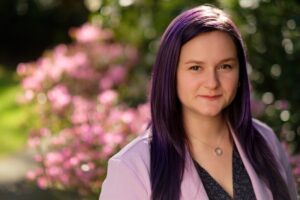
I am so grateful to the Warren Magnuson legacy for this incredible opportunity and to have been selected as a 2025-2026 Magnuson Scholar. My research addresses racial and geographic inequities in the provision of Home and Community Based Services (HCBS) among older adults, particularly those with chronic conditions like diabetes and dementia. Generating research that leads to responsive and relevant long-term care policies is my aim.
Medicaid HCBS are a critical form of long-term care allowing over 7 million older adults and other Medicaid beneficiaries the ability to age in their homes. HCBS use is associated with improved health outcomes and are particularly important for older adults with chronic conditions, like diabetes and dementia, who often require these services. My dissertation research examines state Medicaid HCBS generosity and its impact on service use and health outcomes by race and ethnicity through three interconnected studies.
The first study examines HCBS policy documents. The second and third studies draw on population-based CMS Medicaid and Medicare claims. I find that increasing Medicaid HCBS generosity leads to increased service use among non-Hispanic white, Black, Hispanic, and Asian beneficiaries, but the effects are stronger among non-Hispanic white and Black beneficiaries.
The third study examines nursing home admission and mortality among dual eligible older adults diagnosed with Alzheimer’s disease and diabetes across racial and ethnic groups. Preliminary results show that increasing HCBS generosity reduces hospitalization for non-Hispanic white, Black, Hispanic, and Asian beneficiaries, but effects were greatest for non-Hispanic white and Asian beneficiaries.
I cannot thank those involved in the Magnuson scholarship enough for their support! This award provided the time to work with complex data, forming a foundation for my research and shaping my career trajectory.
Brittany Jones-Cobb – School of Social Work
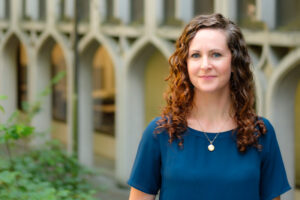
I want to start by thanking the Warren G. Magnuson Family for making this scholarship possible. My research is focused on promoting the development and implementation of targeted, culturally-tailored interventions for older adults without care partners. In the coming decades the combination of an aging population, a rising number of people with disabilities who need care, and structural and functional changes in families and household size will lead to a growing number of older individuals who do not have acquaintances in their social networks who are able and willing to step up and provide support with care and daily living needs.
My current research explores the critical intersection of diabetes and caregiving disparities. Diabetes disproportionately affects older adults from historically marginalized groups, including Black, Hispanic, and LGBTQ+ populations. Despite growing recognition of social determinants of health, little is known about how the absence of informal caregivers influences diabetes onset, progression, or related complications in these communities. These are gaps I am determined to address.
Thus far I have completed the data analysis for a longitudinal study using panel data from the Health and Retirement Study. I am examining whether key risk factors experienced by older adults without care partners are associated with institutionalization. The goal of this study is to help inform potential targets for intervention development.
In addition to this dissertation work, the Magnuson scholarship has allowed me to pursue other projects aligned with my values and research interests. Equally important, the scholarship has allowed me dedicated time to apply for academic and research positions. Because of this, I am able to graduate on time and pursue a career where I can continue engaging in research that supports the dignity and wellbeing of older adults without care partners.